All our dogs need is our love.
Saturday, September 29, 2012
Perfect In My Eyes
All our dogs need is our love.
Thursday, September 27, 2012
Happy Dog vs, Defensive Dog
Monday, September 24, 2012
Training the Down Command (Lay Down)
Down is an important command for a few reasons; going to the Veterinarians or the Groomers are a couple of examples. Also, down in the first step to teaching tricks like “Roll Over”, Crawl, “Play Dead”, to name a few.
Loading the Marker The “marker” is what tells your dog “YES”, they have done the command correctly. A “marker”, can be the word “YES” or a single click with a clicker.
2. Take 1 treat into your right hand
3. Now in an excited voice say “Yes”
4. Then reward your dog
5. Repeat steps 2-4, from 7-10, times
1. Hold the lure(treat) between your thumb and index finger; hold your hand so the palm of your hand is facing the floor and fingers extended straight.
2. Put your dog in the “sit”, position.
3. Hold the lure just under your dog’s nose.
4. Say your dog’s “name” and “down” as you slowly move your hand from under your dog’s nose straight down towards the floor.
5. Move the treat along the floor away from your dog. Your dog should follow the treat and naturally lay down. When your dog lays down mark, reward, release.
(If your dog keeps standing up; try moving the treat towards him instead of away. Slide the treat towards him between his front legs.)
6. Repeat steps 1-5, about five to seven times; increase the duration of time your dog has to stay down before you release him. Remember only increase your duration 1 to 2 seconds at a time.
7. When you see your dog starting to understand the “down” command, increase the distance from your hand to the floor.
8. Continue to increase the distance until you are standing straight up and using the full hand signal.
Sunday, September 23, 2012
Training - "Come When Called"
Saturday, September 15, 2012
Top 10 Puppy Basics
Top 10 Puppy Basics – All of these steps are important for a well adjusted puppy.
1. Start socializing your puppy early. As soon as he has had his second set of shots usually (after 10 weeks). Introduce your puppy to as many new environments, people and dogs as possible. The critical socialization period for a puppy is (8-22 weeks).
2. Take your new puppy to the veterinarian with 72 hours of getting your puppy. It's important to get to know your Vet and for your Vet to know you and you puppy, as this will likely be a long term relationship.
Use common sense when it comes to your Vet, if you are not comfortable with how they are handling your dog, or the Vet does not really listen to what you are saying. Shop around and find another Vet. Ask friends who have dogs for their recommendations,
3. Remember an 8 week old puppy is just a baby, play and handle him gently. Do not engage in rough play or encourage play with that involves biting your hands or clothes. This behavior should be immediately corrected and give the puppy a toy or object he is allow to chew.
Puppies bite/chew and nip, it's our job to teach our puppies what they can and can't bite and what is appropriate play. What is cute as puppy is not so cute in an 80 pound dog.
4. Introduce your puppy to new children and other puppies and dogs slowly. You want every new experience for your do to be a positive one. If your puppy has a negative experience at an early age it could effect his behavior for life, so make sure each new situation is short and positive. Give your puppy lots of praise.
5. Good quality puppy food is very important for the healthy growth of your puppy. Poor quality food may lead to a lifetime of health issues. Do your homework and make sure you are getting the best quality for your breed of dog. Click here for a list of homemade dog treat recipes you can make your dog, click the recipe name to take you to the full recipe.
6. Begin house training the first day you get home. Decide a head of time how you want to potty train your puppy(using puppy pad, going directly outside, using a crate) and be prepared for when you bring your new addition home. 8week old puppies need to go to the bathroom approx every 1-2 hours. The rule of thumb is 1 hour for each month they are. Click here to read "Housebreaking -Training for Success"
7. Don’t inadvertently encourage bad dog behavior. Jumping up, biting, barking, begging for table food. It is so important to correct these behaviors right from the start. It is much easier to teach your puppy the right things to do then it is to correct bad behaviors that he has been allowed to do for months. Remember, what is cute and adorable when your puppy is 8 weeks old will be far from cute when they are grown.
8. Never use food rewards for correcting behaviors. Food rewards should only be used when teaching your dog his commands(sit, come, stay, down, etc....).
If you correct your puppy for jumping up and he goes down, you give him a food reward, you have just encouraged your dog to perform bad in order to get a reward.
Remember, only give food rewards when your dog has done work like sit, stay or come. Only give love as his reward for correcting bad behaviors.
9. When correcting your puppy's behavior, NEVER do anything that will hurt, harm, embarrass, humiliate or loss of dignity. Puppies need love, patience and consistency are your best tools.
10. Have a variety of toys for your puppy, a soft one, a chewy one, a tug toy. See which type of toys your puppy likes to play with more and get him the toys he like rather then spending lots of money on toys they never play with.
Puppies also need a variety of toys for teething, some toys offer more comfort for those teething times.
I highly recommend taking a Puppy Training Class. It is so important for you to learn how to teach your puppy. This is a long commitment you have made, it's your responsibility to learn how to do things the right way. If you spend your puppy's first year working hard and training, you will have the next 10-16 years of having that awesome dog.
Note: Make sure your new puppy has identification in the event that he gets lost. It’s a good idea to identify your dog with an ID tag as well as a dog tattoo or microchip.
If you have any questions about your new puppy, please post it on the comments and I will respond ASAP.
Puppy Milestones:
Puppy is ready to take home 8 weeks
Housebreaking 6-8 weeks
Bathing 7-8 weeks
Obedience training 8-10 weeks
Socialization 8-22 weeks
Heartworm prevention 3 months
Spay or neuter 6-9 months
When is a puppy full grown 1- 1½ years
Dog Owner Training - Training the Owner First
Listed below I have created a list of common mistakes dog owners make
Dog Owner Training -101
Inconsistent training, is the number one reason for bad mannered dogs. If a dog is not well trained it is the responsibility lies on you. Some dogs and breeds will learn faster than others, love, patients and consistency are the most important tools you can use.
10 Common Mistakes New Pet Owners Make
1. No Training Classes: A lot of new dog owners think if they just repeat a word several times their puppy will just understand what you want and do it. When they don't do what we are asking, we get frustrated, angry and think we have a dumb dog.
It is highly recommended that you take a basic puppy/dog training class to learn basic manners for a well behaved dog. Click here for Diamond Dog Training, private in home training.
2. Poor Diet. Diet and exercise are just as important for your dogs as it is for people.
Feeding your dog a low quality food will lead to health problems down the line. Most dog foods that are sold in your local grocery store are a low quality food. They are the equivalent of feeding your dog McDonald's everyday.
Common health issues related to poor diets are; diabetes, heart disease, overweight, hip dysplasia, tooth and gum disease and arthritis, just to name a few.
It's important to educated yourself before heading to the pet store. Do your research on the web, use Google to search "Best quality dog foods", read other pet owners opinion's are a few ways you can find out what is best for your dog.
3. Choosing the Wrong Breed. A lot of people decide on a breed of dog just because of the way they look, how cute they are or by their impressive size. Choosing a dog on these reasons alone in 75% of the cases the dog will be surrendered to an animal shelter or given away.
DON'T EVER BUY A DOG ON IMPULSE! I cannot stress this point strong enough.
When you decide you want to get a puppy or rescue a dog from a shelter, first look at why you want a dog; is it for companionship, protection, a running partner or a loyal friend to be by your side. Research the breeds that fit your expectations and lifestyle. In other words if you very active and love to run and bike, do not get a Shih Tzu or Great Dane as these breeds are not big on exercise. A Husky, Lab or a German Pointer may be a better fit.
Do your research. Getting a puppy or dog is a big commitment and comes with a lot of responsibilities, be sure you are ready for this.
4. Lack of Exercise:
Your lifestyle; if you work for 8-12 hours per day, 5 days a week, can you afford a dog sitter or dog walker. A puppy should never be crated longer then 2-4 as they cannot hold their bladders hour for to long. Will you hire a dog walker or pet sitter? Dogs who are crated all day will be bored, anxious and do not get the exercise they need.
Again, depending on the breed of your dog will determine the type of exercising needed. Small dogs do not need long walks or need to be run. However, larger dogs, working dogs, herding dogs, etc.. need more vigorous exercising. Dog parks where they can run full out, jogging/biking with you, min 1 hour walks.
Not spending enough quality time with your dog. It’s so easy to please your dog. His needs are simple. Take the time to take him for a walk, throw him the ball, take him for a ride or just cuddle with him. It will do you both good.
Researching the breed will let you know what daily exercise is required for that breed. A tired dog is a happy dog. Click here to read "Exercising Your Pet’s Body and Mind"
5. Yearly Visits to the Vets: When we get a puppy, we know they have to go to vet to get their required needles, de-worming, etc. However, a lot of us after the first year do not take our dogs to the Vets for yearly check-ups. A lot of pet owners only take their dog to the Vets when something they are sick or injured.
It is very important to take your dog to the Vets for a yearly check-up. Check-ups will ensure your dog is healthy and doing well. Since our dogs cannot speak to us, at times there are serious health issues but we did not notice them until it was to late. Early detection of anything is so important and will save you thousands of dollars in the end.
Click here to read "Over-Vaccination - Dog Owners Beware"
6. Human Food: NEVER give you puppy or dog human food. Although, we think we are doing something nice for our dog, giving your dog human food will only lead to begging, stealing food, garbage and counter surfing and a host of other problems. Also, remember a lot of human food is bad and sometimes dangerous and or fatal to your dogs. Click here to read a List of Dangerous Foods for Dogs.
7. No Pet Identification Tags: New pet owners think their dogs will always be with them, they don't let them out by themselves, why does my dog need a tag. This inexpensive thing can be the difference between your dog being returned to you safely or ending up in a shelter and adopted out to a new family. Don’t skip this step and make sure your dog’s tags are always up to date.
8. No Pet Health Insurance. It can be heartbreaking if you’re unable to give your dog medical treatment because of finances. Insurance can make sure your dog will always receive the care he needs without breaking your bank account.
9. Proper Grooming for your Breed: Good hygiene is just as important for your dog as it is for us. Even short hair dogs need attention. Make sure you bath them regularly, cut their nails, and check their ears and skin. Long haired dogs require far more grooming. If you are not able to do the daily and monthly grooming that is needed for long haired dogs, make sure you find a good and reputable Dog Groomer. If daily brushing and eye cleaning is not for you, consider a breed that does not require as much daily maintenance. A matted dog is an unhappy dog. Click here to read "How to Groom Shih Tzu Dogs"
10. Not spaying or neutering: Thousands of pets are euthanized every day due to pet overpopulation. Spaying or neutering your dog can help prevent homelessness, cruelty, suffering and death.
Okay, your dog owner training is complete. Congratulations on being a responsible dog owner.
Remember, do your research, don't impulse buy and most important make sure you have the time.
/
Thursday, September 13, 2012
Hip Dysplasia - Cause, Prevention, Maintenance
Hip Dysplasia, has become a serious issues with dogs today. Why? Poor breeding!
What is Hip Dysplasia? Hip dysplasia is associated with abnormal joint structure and a laxity of the muscles, connective tissue, and ligaments that would normally support the joint. As joint laxity develops, the articular surfaces of the two bones lose contact with each other. This separation of the two bones within the joint is called a subluxation, and this causes a drastic change in the size and shape of the articular surfaces. Most dysplastic dogs are born with normal hips but due to their genetic make-up (and possibly other factors) the soft tissues that surround the joint develop abnormally causing the subluxation. It is this subluxation and the remodeling of the hip that leads to the symptoms we associate with this disease. Hip dysplasia may or may not be bilateral; affecting both the right and/or left hip.

When it comes to hip dysplasia, there is only one thing that researchers agree on; selective breeding is crucial. We know that through selectively breeding animals with certified hips, we can significantly reduce the incidence of hip dysplasia. We also know that we can increase the incidence of hip dysplasia if we choose to use dysplastic animals for breeding. Breeding two animals with excellent hips does not guarantee that all of the offspring will be free of hip dysplasia, but there will be a much lower incidence than if we breed two animals with fair or poor hips. If we only bred animals with excellent hips it would not take long to make hip dysplasia a rare occurrence. If owners insisted on only purchasing an animal that had parents and grandparents with certified good or excellent hips, or if breeders only bred these excellent animals, then the majority of the problems caused by hip dysplasia would be eliminated. For someone looking to purchase a dog, the best way to lower the possibility of getting an animal that develops hip dysplasia is to examine the incidence of hip dysplasia in the litter's lineage. It is best to examine the parents and grandparents out to three or four generations.There are many different theories on how to prevent the progression of hip dysplasia. As discussed earlier, poor nutrition, inadequate or improper exercise, and increased body weight may all contribute to the severity of osteoarthritis after the hip dysplasia has developed. Following solid recommendations for exercise and nutrition may help, but will never come close to controlling or eliminating the disease if stricter requirements for certified hips are not instituted or demanded.
Click here for a great article all about Hip Dysplasia, causes, prevention, treatments, etc...
-->
Wednesday, September 12, 2012
Thundershirt - Do They Really Work?
I am a professional trainer and I have used the ThunderShirt on a lot of puppies and dogs with amazing success.
When a dog suffers from anxiety it can come out in many different ways; frightened, shaking, barking, excited jumping, aggression towards people and/or dogs or an over excited dog. Most of the times these bad or negative behaviors are due to anxiety. As the dog owner we believe we just have a bad behaved dog when certain situations arise.
Is your dog great at home but when you take him for a walk he turns into Cujo? More then likely it's due to your dog feeling very anxious when he is away from home. The ThunderShirt relieves this anxiety so your sweet dog at home is the same sweet dog when going out of the house.
I worked in a pet retail store and sold a lot of ThunderShirts. A dog would come into the store, scared, tail tucked under and legs shaking. I would put a ThunderShirt on the dog and within literally minutes the dogs tail would be up, shaking stops and the dog now feels confident and assured.
I'm also a dog trainer and use the ThunderShirt often for over excited puppies. Once I put the ThunderShirt on, the puppy I could not get to focus for 1 second is now sitting, listening and obeying his commands.
If I had not seen the truly positive effects the ThunderShirt has with my own eyes, I would never believe that something so simple can be so effective for a dogs anxiety.
-->
Friday, September 7, 2012
Senior Dogs Mask Their Disease
“If they acted sick [in the wild] …they would lose their position in the pack.”
This is an excellent video. I’d never heard this explanation about older dogs, or dogs in general, before and it makes perfect sense!
Dr. Dressler of South Shore Vet Care talks about health tips for our Senior Dogs and Pets
Dr Demian Dressler of South Shore Vet Care in Kihei Hawaii, brings us up to speed about our Senior pets and shares a few health tips that can extend their life span.
Tagged as: health tips, older dogs, senior dogs, senior pets, veterinarian
View the original article here
Banana & Peanut Butter Dog Cake
Make this dog cake extra rich with the optional cream cheese frosting. See our tips below for more fun ways of decorating the cakes and dog muffins.
Banana & Peanut Butter Dog Cake Recipe Mini Muffin Version
Ingredients:
1/2 cup canola oil
1/2 cup applesauce, unsweetened
1/4 cup molasses, blackstrap
1/4 cup peanut butter
4 eggs
2 cups whole wheat flour
2 tsp baking soda
2 tsp cinnamon
2 ripe bananas, mashed
Instructions:
Preheat oven to 350° FIn a stand mixer bowl, add the canola oil, applesauce and molasses.
On low-medium speed, thoroughly combine.
Add the peanut butter, and mix until combined.
Add the eggs one at a time, until all combined.
In a large bowl, whisk together the flour, baking soda and cinnamon.
Using the lowest setting, or the stir setting on your mixer, slowly add the dryingredients.
In a small bowl, mash the bananas.
Take the mixing bowl off the stand. Fold in the mashed bananas, making sure they are well incorporated.
Using a baking spray with flour, generously spray each 8 inch pan.
Divide the batter between both pans.
Bake for 30 minutes, or until a toothpick comes clean. Rotate the pans on the racks half way through the baking time.
Cool on a wire rack for 10 minutes.
Remove the cakes from the pan, and cool completely on a wire rack. Cream Cheese Dog Treat Frosting8 ounces cream cheese (low or fat free)2 Tbsp. honey
2 Tbsp. plain yogurt (low or fat free)
flour (see note)
Note: You will need approximately 3 Tbsp. of flour. You can use any type of flour for this recipe. Keep in mind that if you use wheat flour (or another type of flour with specs of color) it may affect the end color of the icing.
Mix first three ingredients in a bowl until smooth.Mix in one tablespoon of flour at a time until you have a good consistency for spreading.Storing - This dog cake recipe will keep fresh in the refrigerator for about 5 days. Freeze the cakes for up to 3 months. If you choose to freeze the cakes, wrap each one individually with plastic wrap. Then wrap each one with heavy duty aluminum foil. Then place each one in a labeled freezer bag. It may seem like a lot of work, but it will keep the dog cakes delicate texture fresh longer.
Yield - Two 8 inch round cakes.
Decorating Ideas - For an all out special dog cake, make enough cream cheese dog frosting to put between the two cakes, on top and the sides of the layered cake. Or, my favorite decorating idea is to cut half inch banana slices and place them as the layer between the two cakes. Then frost the top of the cake with cream cheese frosting. If your dog is watching his calorie intake, you should limit the amount of icing you put on the cake. One idea is to use the frosting to make small polka dots and write a happy note on top of the cake, like "#1 DOG". You can omit the frosting all together and use banana slices as the decoration.Mini Muffins - Using a mini muffin pan with 24 cups, you will be able to fill your pan twice to get a total of 48 muffins. Bake at the same temperature, but for 10 minutes. Turn the pan half way for even baking. Let the pan cool on a wire rack for 5 minutes before removing the muffins. Cool the muffins on a wire rack. We like this version of creating mini muffins best because it is so versatile. If your dog is small, you can easily break apart one muffin for two servings. Or, for larger dogs, they get their very own muffin. The muffins also travel very well, so you can make extras for dog party favors, or gifts. We used a scant tablespoon cookie scooper to easily measure the right amount of batter into each cup. The muffins rise quite a bit, so don't overfill the muffin cups.
Paper Liners - We used plain paper liners, but it would be adorable to make these muffins with paw print cupcake liners. Or, match the colors of your dog party, or the season, to make your homemade dog treats more festive.
Stand Mixer - If you don't have a stand mixer, you can use a hand held one instead. But, we recommend the stand mixer due to its many speeds and large capacity for heavier dog treat batters.
Good Dog Beef Biscuits
1/2 cup dry milk
1 egg
2 teaspoons minced garlic
1 teaspoon parsley
6 tablespoons olive oil
2 teaspoons honey
1 small (2.5 oz) jar beef baby food
1/2 cup beef broth
1/2 cup rye flour
1 cup cup whole wheat flour
1/2 cup rice flour
1/2 cup cracked wheat
For the Glaze - 1 egg, 2 tablespoons beef broth
Directions:
Preheat oven to 325 ° F (165 ° C).
In a large bowl, combine the dry milk, egg garlic, parsley, oil, honey, baby food, and broth. Gradually blend in the flours and cracked wheat. Add enough wheat flour to form a stiff dough.
Transfer to a floured surface and knead until smooth (about 3-5 minutes). Shape the dough into a ball, and roll to 1/2-inch (12 mm) thick. Using bone-shaped cookie cutters, make biscuits! Transfer to ungreased baking sheets, spacing them about 1/4 inch (6 mm) apart. Gather up the scraps, roll out again, and cut additional biscuits.
Bake for 30 minutes. Whisk together the egg and broth for the glaze. Brush biscuits with the glaze on both sides. Return to oven and bake for an additional 30 minutes. Let cool overnight.
Makes several dozen small bones that freeze well. Or 2 1/2 to 3 dozen large bones, depending on the size of cookie cutter you use.
Tweet
View the original article here
Thursday, September 6, 2012
Gourmet Salmon Cakes for Dogs
Health benefits of salmon, such as the goodness of fish oil for dogs, the high amount of protein, vitamin D and the Omega 3 fatty acids.
Salmon Cakes for Dogs
Ingredients:
Salmon Cakes
1 14.75 oz can of wild Alaskan salmon
2 egg whites
1/4 cup sour cream, low or fat free
2 tsp. dried parsley
1/2 cup carrot, shredded
1/2 cup plain bread crumbs
1 tsp. dried dill weed
Yogurt Tartar Sauce
1/4 cup plain yogurt, low or fat free
1/2 tsp. dried dill weed
Instructions:
Salmon Cakes
Drain liquid from salmon. Remove bones and skin, if any.
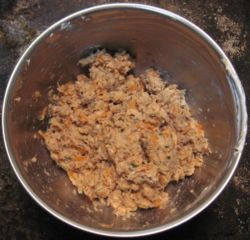
In a medium bowl, mix together salmon and next four ingredients (through shredded carrot).
Using a cookie scooper, scoop one ball and lightly flatten into a patty form.
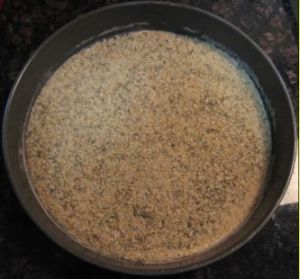
Dredge or thoroughly coat the patty in the bread crumb mixture.
Place on a lightly greased cookie sheet.
Repeat until there is no more salmon mixture.
Bake for 12 minutes. Then flip and bake for 12 more minutes.
Cool completely on a wire rack before serving.
Mix together yogurt and dried dill weed.
Cover and refrigerate until salmon cakes are cool.
Storing & Yield: Any dog treat recipe with meat should be served quickly. We recommend one week in the refrigerator. You can freeze these salmon cakes for 2 months. If you are using a 1" cookie scoop, this recipe should make 2 dozen salmon dog treats.
Be sure to drain the salmon very well. Otherwise the mixture will be too moist and will not hold together. If you have already combined the salmon mixture and it is not holding together, add one tablespoon of plain bread crumbs at a time, until the mixture stays together.
To save time you can use pre-shredded carrots.
If your dog needs or prefers softer treats, you can bake the cakes for 10 minutes on each side.
Tweet
Boston Terrier
From Wikipedia, the free encyclopedia
TweetTweet
View the original article here
Diamond Delight Dog Treats Cookbook
Frozen Pupsicles
1 cup peanut butter (smooth or Chunky)
1/2-3/4 cup wheat germ
1/2 cup unsalted peanuts chopped fine
Instructions
Mix the bananas with the peanut butter. Mix in enough wheat germ to make fairly thick dough-roll into 1 inch balls. Roll in chopped peanuts. Freeze on cookie sheet. Tweet
Nutty Peanut Butter Treats
1 1/2 cup flour
1/2 cup water
3/4 cup uncooked oatmeal
1/4 cup honey crunch wheat germ
1/4 cup peanut butter (Chunky peanut butter works good or smooth)
1/4 cup salad oil
1/4 cup honey
1 tablespoon Molasses
1 tsp baking powder Directions: mix 1 c flour and 1/2 c water with the remaining ingredients until we blended. Stir in the remaining ingredient 1/2 c flour. Knead on well-floured surface until dough holds together. Roll out to 1/4" thick. Cut in to shapes. Bake on large un-greased cookie sheet for 20 minutes. Turn off oven and leave cookie sheet in the oven for 45 minutes to a hour. Remove cookies and enjoy!!
View the original article here
Paws Awhile Berners
If you are looking for a reputable breeder of Bernese Mountain Dogs then I highly recommend Paws Awhile Kennels.
Paws Awhile Berners is a professional breeder of Bernese Mountain Dogs and designer Bernoodles (Bernese-Standard Poodle hybrid). We operate in a humane and responsible environment. The Bernese is a highly social breed who craves the attention and interaction of people and other dogs. We are proud of our kennel-free facility where our dogs roam free throughout our 5 acre property.
When you feel your family is ready to adopt a Bernese Mountain Dog, we encourage you to visit our Upcoming Litters section and place a deposit on a male or female puppy from the upcoming litter of your choice. You can follow your puppy's development and begin to prepare for your new family member.
Peanut Butter & Honey Crunch Treats
1 cup crunchy peanut butter
2 cups chicken broth or water
1/3 cup peanut oil 1 cup rolled oats
1 cup oat bran
3-4 cups oat flour
Directions:
Preheat oven to 350 ° F (180 ° C).
In a small dutch oven or large saucepan, combine honey, peanut butter (try to find a brand that has no added suger, salt or other ingredients; ideally it should only contain peanuts), chicken broth, and peanut oil. Heat, stirring often, until mixture begins to simmer. Remove from heat. Stir in rolled oats and oat bran and let cool until lukewarm -- or cool enough to work with. Gradually blend in oat flour, adding enough to form a stiff dough.
Transfer to a floured (oat flour or rye flour) surface and knead until smooth (about 3-5 minutes). Shape the dough into a ball, and roll to 1/4-inch (6 mm) thick. Use a mini-cookie cutter or cut into small squares. Transfer to ungreased baking sheets, spacing them about 1/4 inch (6 mm) apart. Gather up the scraps, roll out again, and cut additional biscuits. If the dough becomes too crumbly to work with after a few rollings, sprinkle with a little water to bind it together and knead it for 30 seconds or so.
Bake for 30 minutes. Remove from oven and turn over. Bake for an additional 30 minutes, or until golden brown on both sides. After you finish baking all batches of biscuits, turn off the oven, spread all the biscuits in one baking pan and set them in the oven to cool for a few hours or overnight. The extra time in the oven as it cools off helps make the treats crispier. These make a more delicate crunchy biscuit, so we use them more for special or training treats, not tartar control.
Makes several dozen small treats that keep and freeze well.
Tweet


.jpg)
.jpg)
.jpg)